

For this year’s Learning at Work Week (LAWW), I wanted to share my experience of using a different and personal learning technique that helped me overcome a huge obstacle that threatened to derail my career before it had even started.
The obstacle I never saw coming
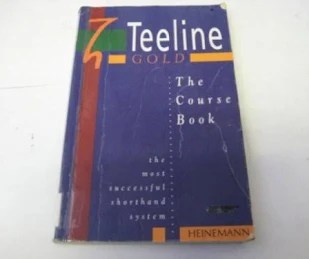
Back at the dawn of the 21st century, I was training to become a journalist in the north of England. Everything was going smoothly, the transition from analogue to digital and new ways of working were going well – nearly everything was falling into place…apart from the dreaded shorthand – a word daunting enough to send a shudder down the spine of wannabe reporters up and down the country.
I had been toiling away for a year at this point. The aim was to have 40 words per minute in the bag by the end of the first year of study, move up to 80 words per minute in the second year, and a minimum 100 words per minute by the time of graduation. To say it wasn’t going well was an understatement – none of the class could grasp it.
Lines and squiggles swirled around my head in uncoordinated fashion, the Teeline jingle at the start of each session rang in my ears, but the page remained primarily blank as I immediately got lost in the flow of words, unable to swim upstream against the onrushing torrent.
The first three hurdles of learning
Something had to change; the situation was getting me down and causing me restless nights. That one hour a week made me feel nauseous. The summer break couldn’t come soon enough. I was determined to go back to university in September having made some kind of progress – perhaps even with the ability to hit that magical 40 words per minute. And here is the first hurdle that you must clear in learning – you have to want it – no one learns without wanting to learn. The second hurdle is setting yourself a clear and achievable goal – it is OK to aspire, but each part of the journey needs to be in reach.
So, I set time aside – the third and perhaps hardest hurdle of all for us in our busy daily lives – and started out simply with a blank notebook, my Teeline textbook, and a pencil. I tackled this methodically. I knew where I wanted to get to, but the method I was using wasn’t getting me there. Something had to change. I have to find a way to learn that will work for me and my surroundings because listening to endless audio of someone delivering generic letters in a monotone way at a speed I can’t achieve is having the opposite effect – it is off-putting.
When the standard approach stopped working
I took a big step back to reflect and broke the task down into smaller chunks. I have essentially a new language to learn (although the output is English), and a speed I have to attain. Language = words. Speed = numbers. My solution would come to me, as things so often do in life, when I was away from the task and doing something else. University also saw me milling around in countless bands dreaming of rock n’ roll stardom. When it came time to practice, I was flicking through one of the guitar tablature books I had bought to learn some of the cover songs we were planning on playing. As I leafed my way through the book, a pattern began to emerge. Words. Numbers. Words. Numbers. What else is there that I used every day that had the same combination of words and numbers at an ever-increasing speed? The answer was staring me right in the face or more accurately blasting into my ears. Music.
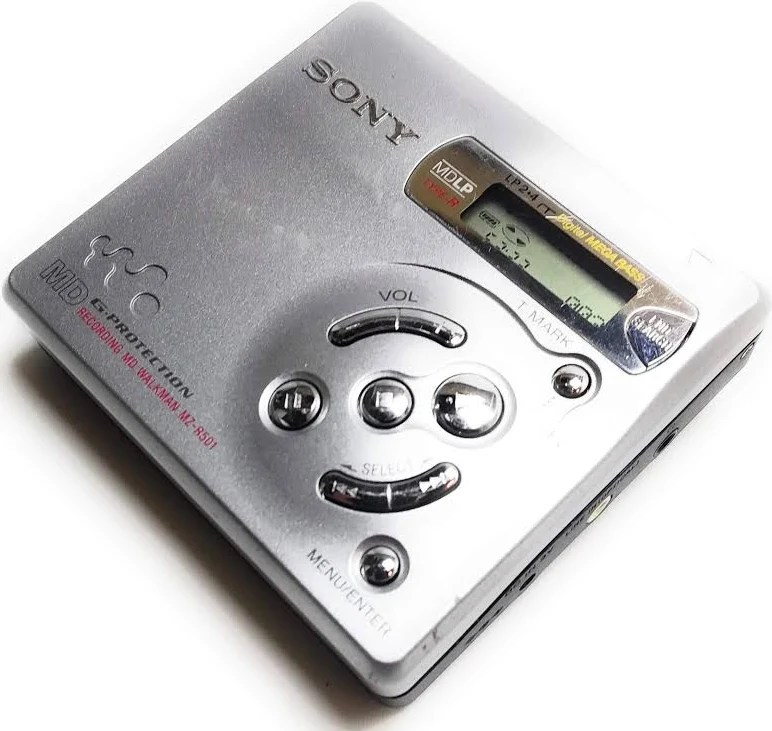
The three figure numbers in the corner of each song in my tablature book represented beats per minute. The words under each transcription represented the song lyrics. Could I translate that into shorthand output? An investment I had made during my first year at university was a MiniDisc player – I utilised it as a music player, Dictaphone and a recording device – it was the perfect accompaniment to my learning. I browsed through my music collection and made myself a mixtape (or more accurately a mix-disc) – with some of my favourite songs, starting with something very slow and getting faster and faster as the disc went on.

When practice became progress
The next step was to put the method into practice. The earphones went in. The play button was pressed. The song starts. The lyrics come in. And the words began to flow. It was as if an outer force had control of my hand, as the pen wove its way across the page like never before. As my confidence grew, the songs got faster but I kept up – practising while doing something I enjoyed made all the difference.
I had a holiday job whilst at university, I made sure to take my set-up with me every day. Whenever there was some down-time or a break, I was practicing diligently. When we returned to university in September, our third tutorial session of the first day back was shorthand. Now the proof would be in the pudding.
We went straight into a test transcription. 40 words per minute. Let’s see how much we remembered from before the summer break. I could see the look of trepidation on my peers’ faces. The audio began and sure enough, the words began to flow. I nailed it. 40 words per minute in shorthand successfully translated back word-for-word. Our tutor, Joyce, knew our struggles, so she was suitably taken aback when she marked my paper and found it not only full but correct. What was my secret? What had made things click over the summer period?
When I answered ‘music’, everyone else in the room looked at me dumbfounded. It seemed the most unorthodox way to learn shorthand that you could imagine. But it worked for me, and that was the key. My fellow students seemed doubtful that the method would work for them. But the following week, my friend said to me that she had tried doing the same at the weekend, and for the first time she was able to string a shorthand sentence together with no gaps (she declined the offer of borrowing my mix-disc; we had very differing musical tastes after all, and remember, you have to find something that works for you).
Bringing learning into the workplace
This approach has helped me with my learning after education, especially in the workplace. And in this modern media world, it is more prevalent than ever. I love listening (I’ve probably spent 75% of my life with some form device in my ears, long before Teams meetings became the norm) and absorbing information, then breaking things down into bitesize chunks that you can visit and re-visit as needed, with a blank canvas that allows for trial and error.
I have put this into practice in the workplace. Around seven years ago, I was working for a housing organisation that had recently undergone a merger. One of my tasks was to build a new intranet through SharePoint. We created ‘Round of Applause’, a recognition tool linked to company values that allowed colleagues to celebrate each other’s contributions and receive meaningful rewards.
We had a skeleton Power App that allowed us to build 75% of the project but the personalisation and several unique elements were missing. We didn’t have any in-house technical support. So, the earphones went in and I tackled a learning series on Microsoft’s YouTube – testing and trialling the method as I built the code slowly brick-by-brick. The final product wasn’t 100% easy on the eye but the most important thing was that it worked, and it was easy to use. I couldn’t have achieved this without my own learning method.
What works for me
To summarise, here’s what I have found works for me:
- Want to learn – Real progress starts with genuine motivation. Nobody learns effectively unless they truly want to.
- Set a clear, achievable goal – Know what success looks like and break the bigger ambition into realistic milestones.
- Make time for it – Learning needs dedicated time and practice, even in busy lives. Breaking things down into smaller chunks really helps. Practice little and often, then gradually stretch yourself as your confidence grows.
- Pause and reflect – Step back, assess the challenge, and understand what is really holding you back. Be honest enough with yourself to recognise when something isn’t working.
- Find a method that works for you – Learning is personal; don’t assume the standard approach is the best approach, and don’t be swayed by others telling you ‘That will never work’ –- find that out for yourself.
- Connect learning to something you enjoy or already understand – Familiar interests are a great way of unlocking new understanding.
- Test, adapt, and refine – Trial and error is part of the process; keep adjusting until it works. Build your confidence through small wins. Keep returning to your learning regularly, so it becomes habit.
- Share what works with others – Sometimes your learning approach can unlock progress for someone else.






Leave a comment